

NEUROCHAIN
A cognitive, post-quantum, financial, scalable and evolutionary Layer 1.
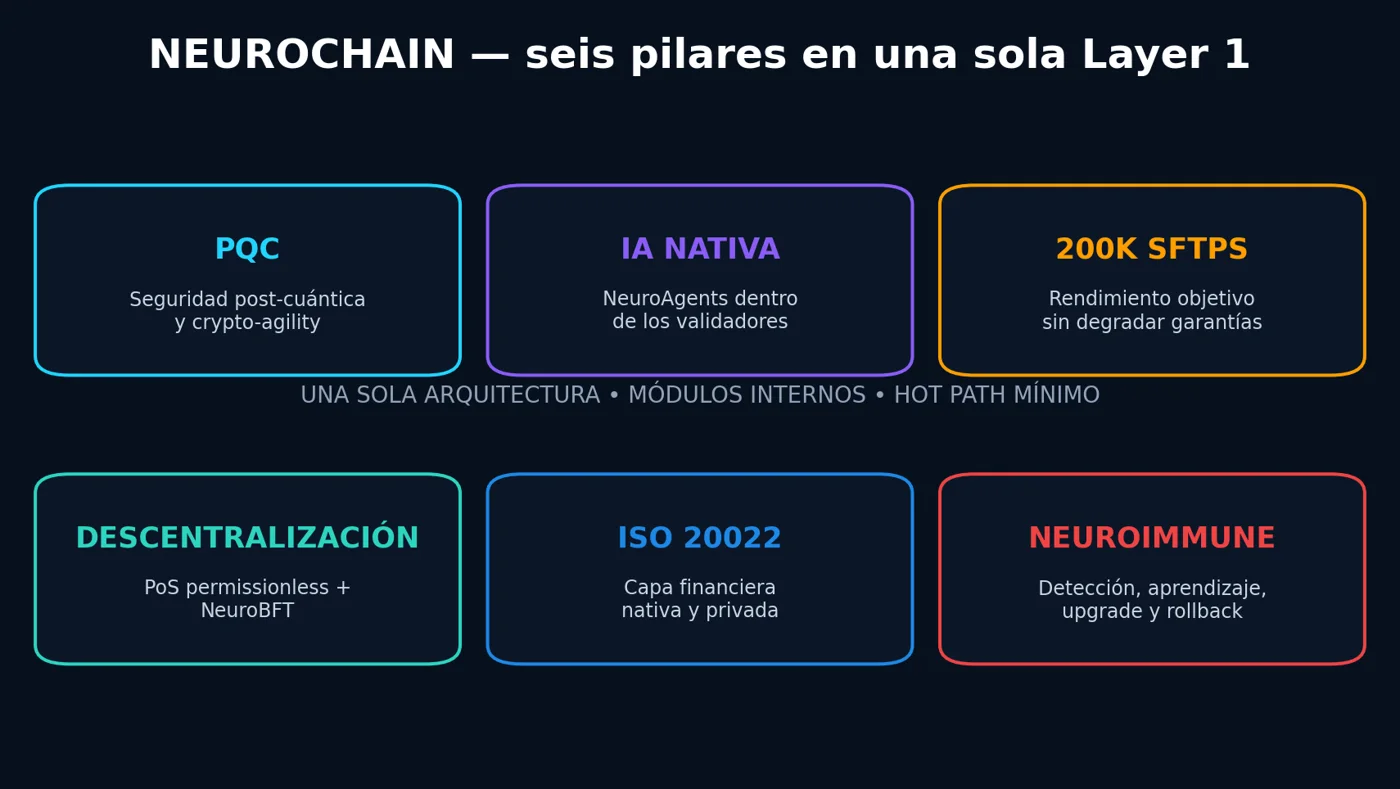
Not a collection of features but a single L1 designed around six simultaneous capabilities: post-quantum security, native AI in validators, high throughput, permissionless decentralization, ISO 20022 financial semantics and continuous self-defense.
Designed together from Genesis.
Adding these properties afterwards creates friction, technical debt and dependencies that degrade the original guarantees. NEUROCHAIN designs them together.
Post-quantum security and crypto-agility: ML-DSA, ML-KEM and SLH-DSA, governed migration between suites.
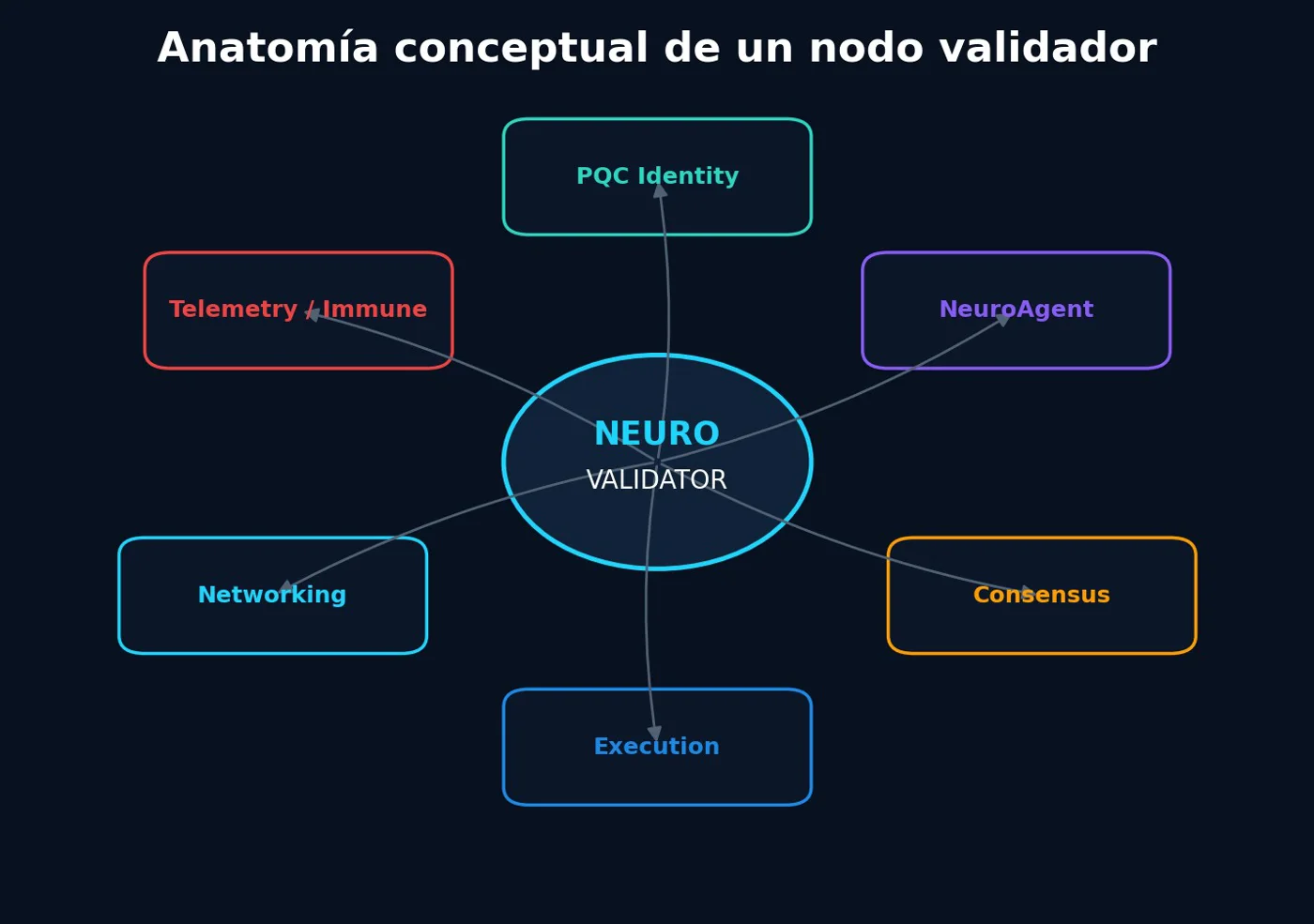
A NeuroAgent inside every validator: analysis, signed attestations and defense. Never the arbiter of consensus.
Secure Finalized Transactions Per Second: validated, executed, committed and finalized. Not raw TPS.
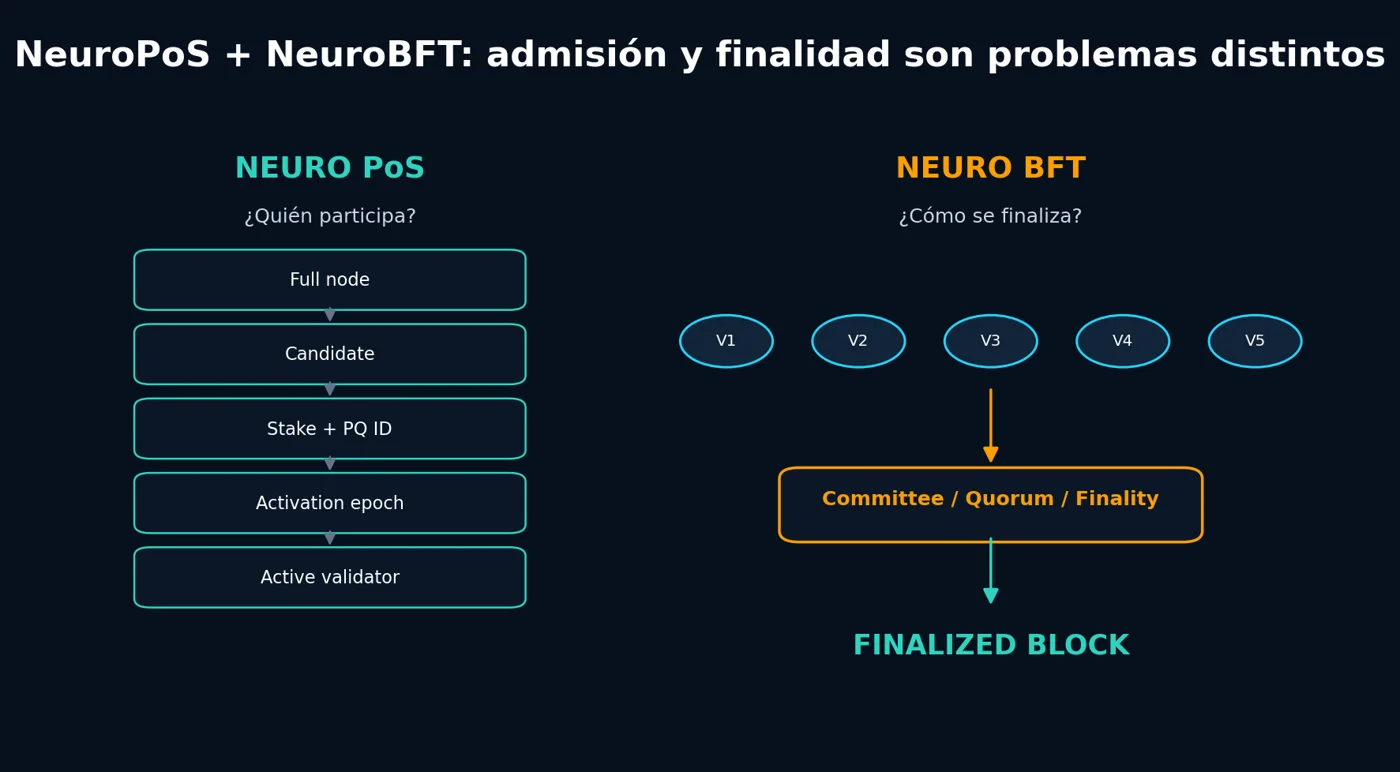
Permissionless Proof of Stake for admission, NeuroBFT for deterministic finality, multi-client by design.
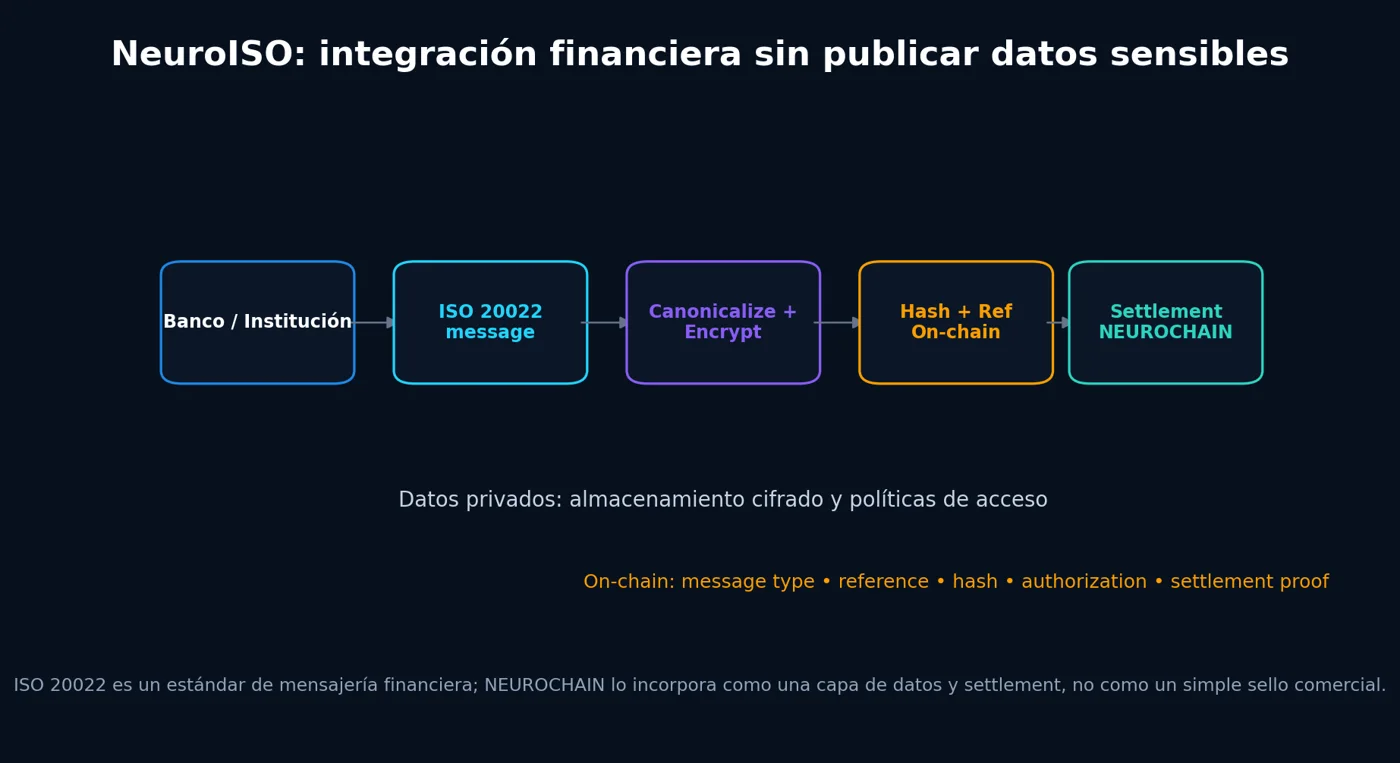
Native, private financial layer: semantics, hashes, references and settlement evidence on-chain; sensitive payload off-chain.
Detect, learn, upgrade and roll back without downtime. Software rollback, never rollback of finalized blocks.
Everything native. Nothing unnecessarily synchronous.
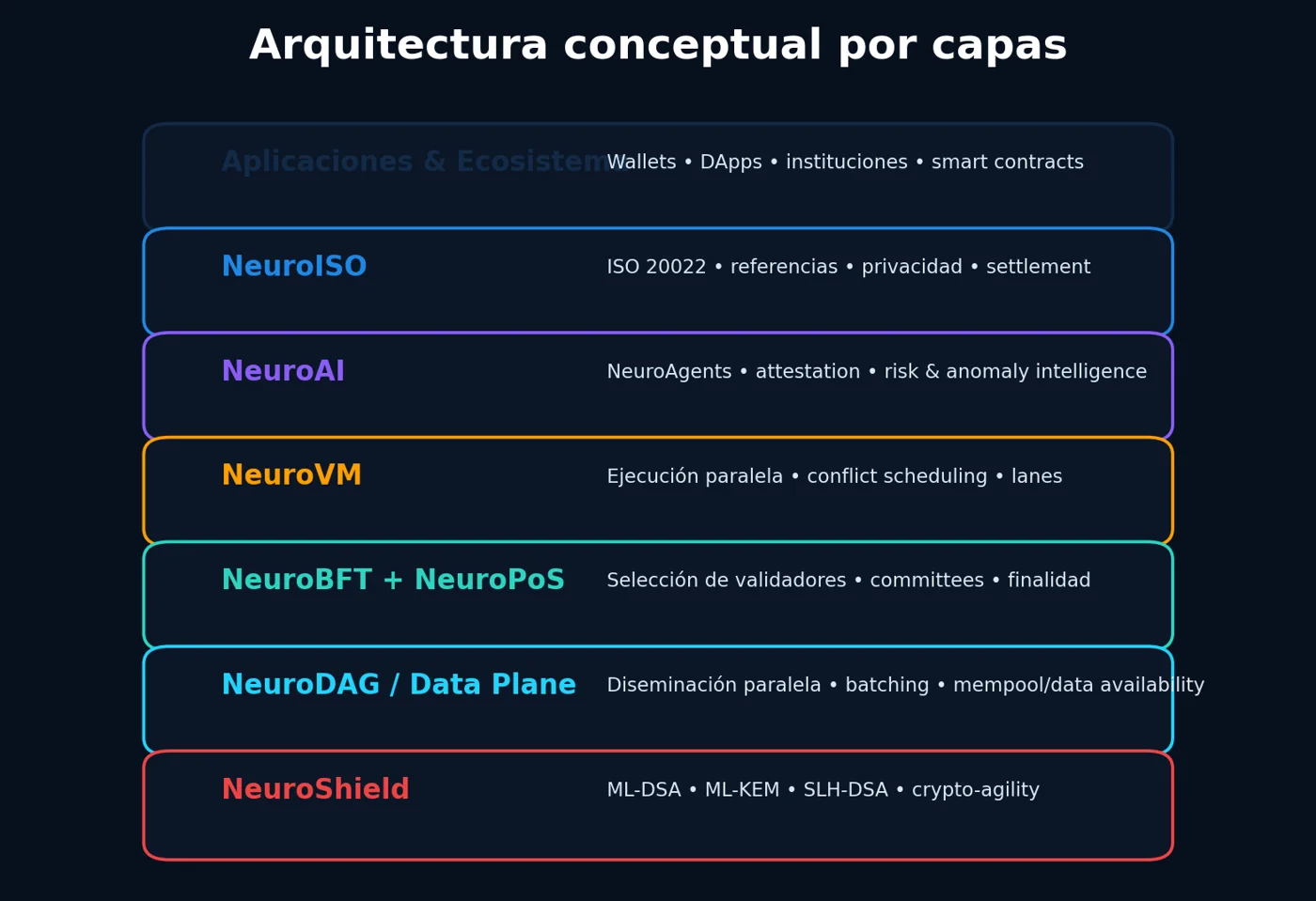
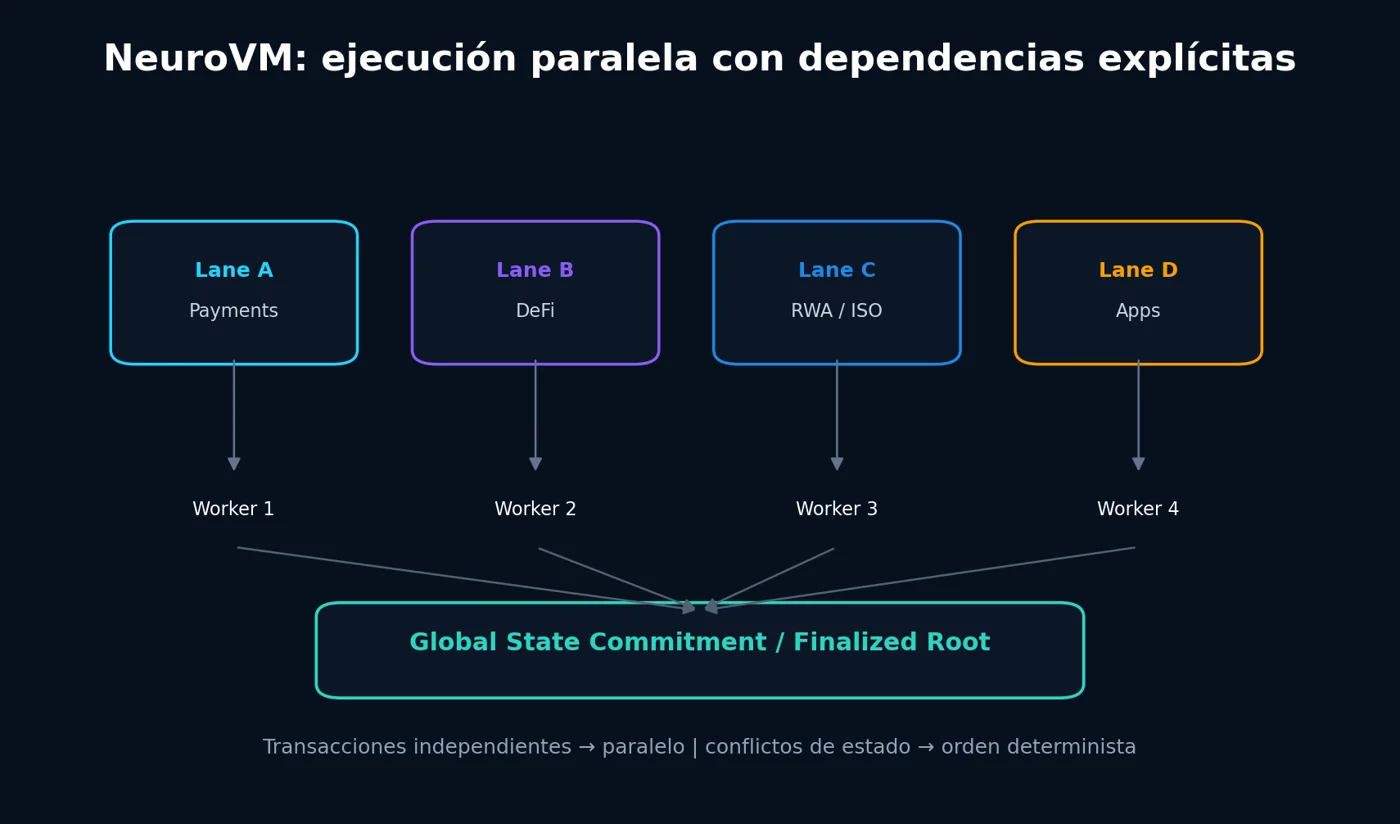
Data, execution, consensus, intelligence and security planes are separated. Cryptographic validation, ordering, execution and finality form the hot path; deep AI analysis, telemetry, indexing, ISO logic and upgrade simulations run in parallel.
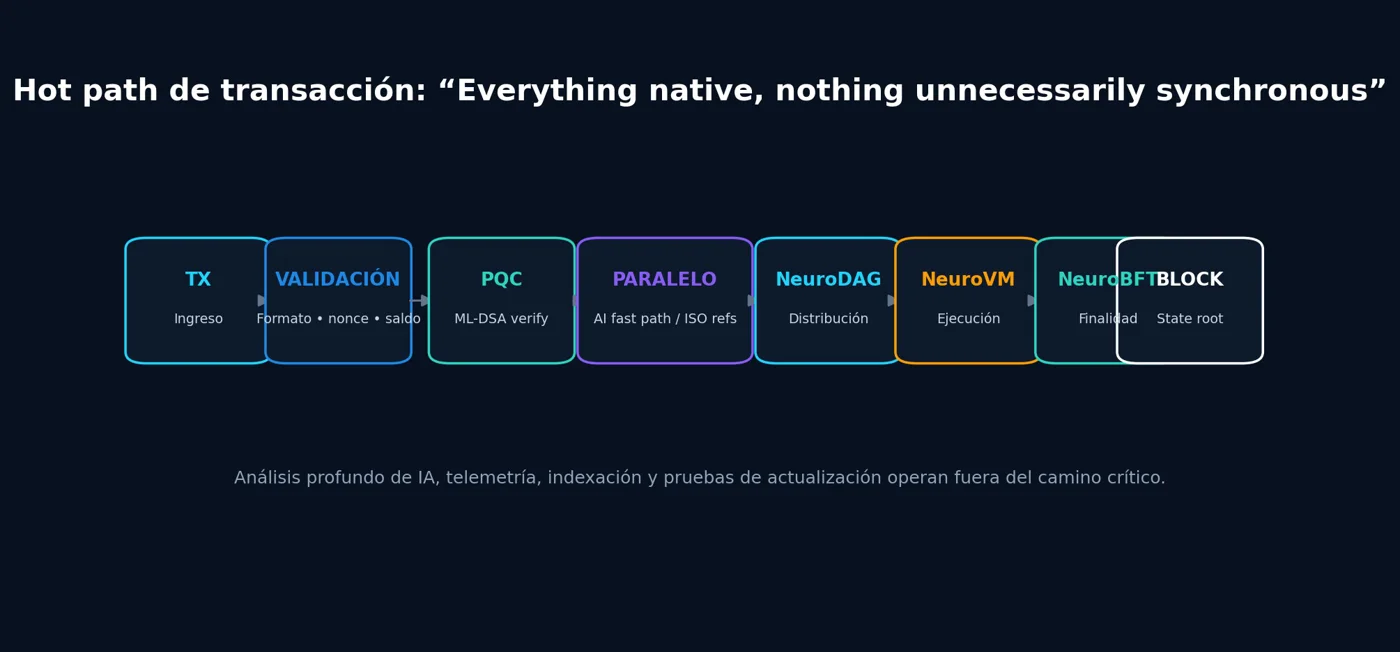
The rules no optimization may contradict.
| Question | Decision | Security condition |
|---|---|---|
| PoW or PoS? | NeuroPoS for admission + NeuroBFT for finality | Economic selection never replaces BFT rules |
| Does AI rule consensus? | No. NeuroAgents analyze and attest | Base validity stays deterministic |
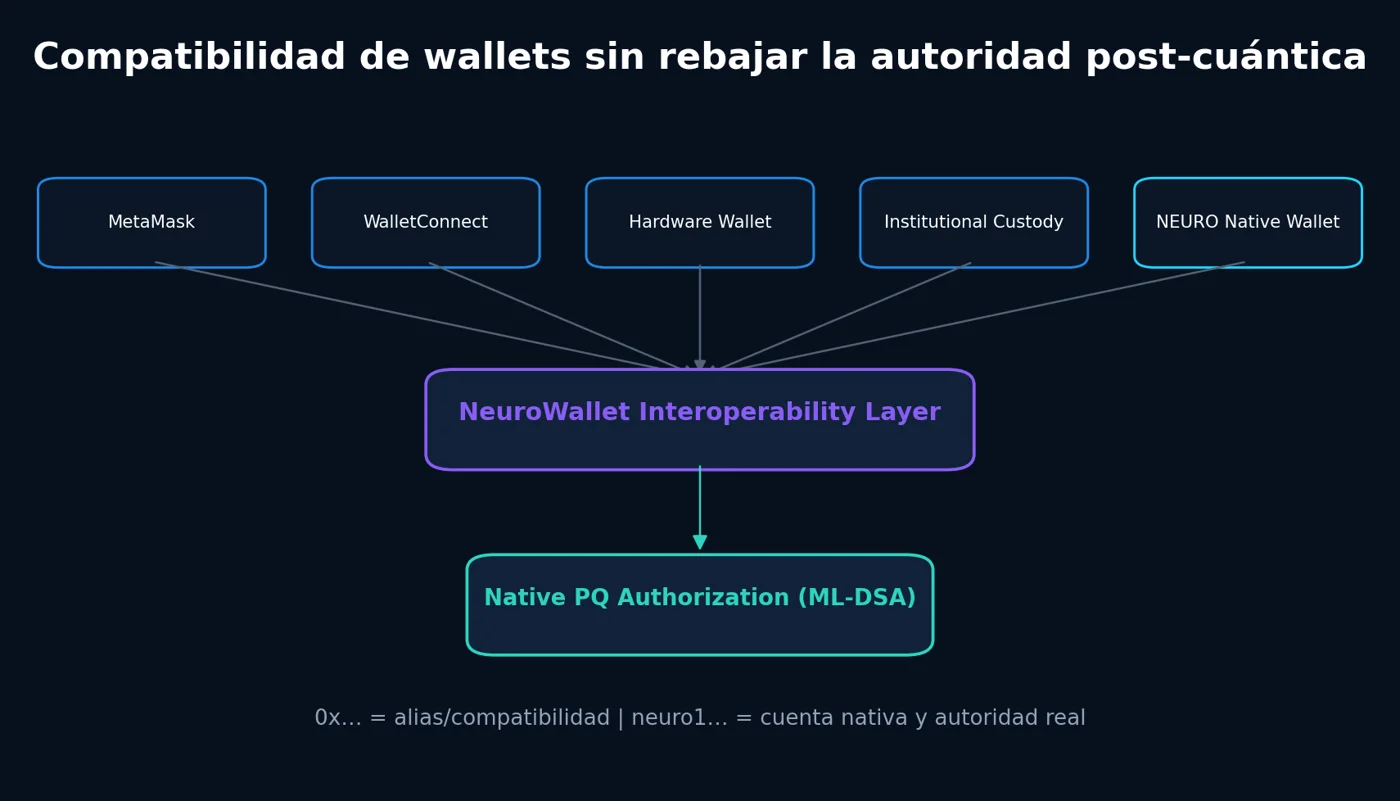
| Native 0x addresses? | No. neuro1… is the native namespace | 0x… remains an alias / compatibility layer |
| PQC added later? | No. PQC from Genesis | Crypto-agility allows future migration |
| Full ISO 20022 on-chain? | No. Semantics + hash + refs + settlement | Sensitive payload encrypted off-ledger |
| Automatic update from one node? | Never unilateral | Independent reproduction + quorum + canary |
| Chain rollback? | No | Software rollback, never finalized blocks |
| 200K TPS as launch claim? | No. Engineering target | Publish only measured, reproducible SFTPS |
| Powerful GPU = more votes? | No | AI capability never buys consensus power |
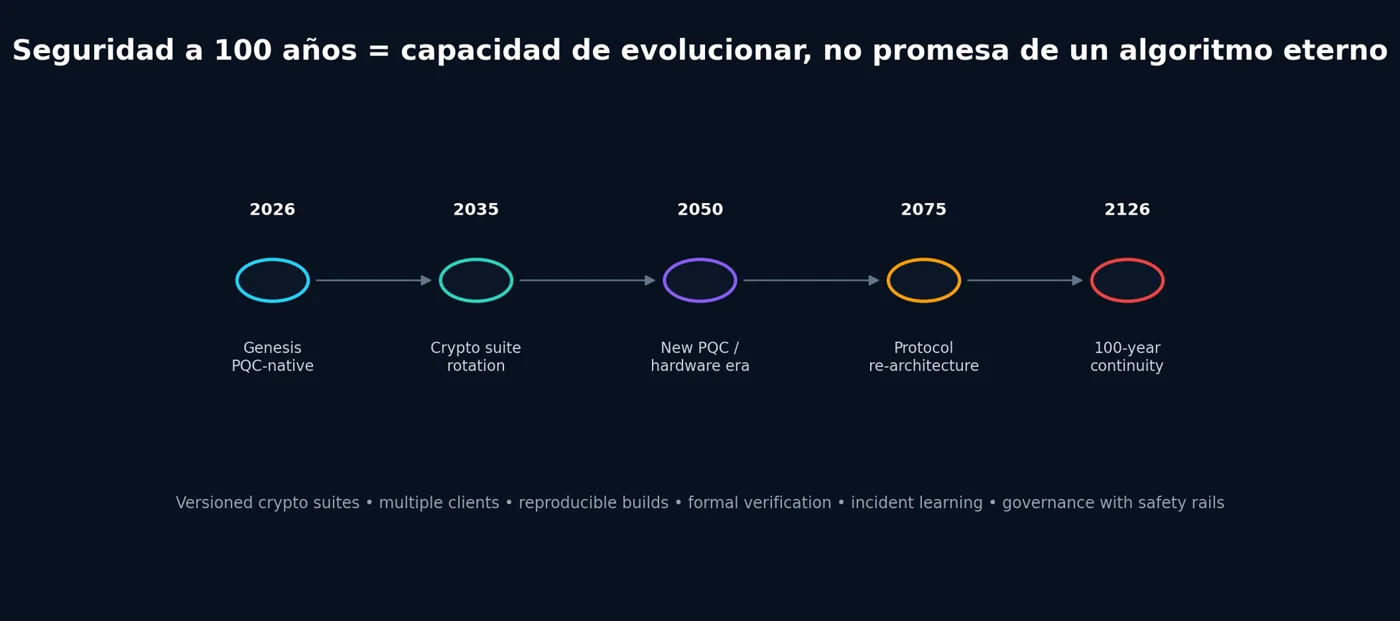
100-year security means the ability to evolve.
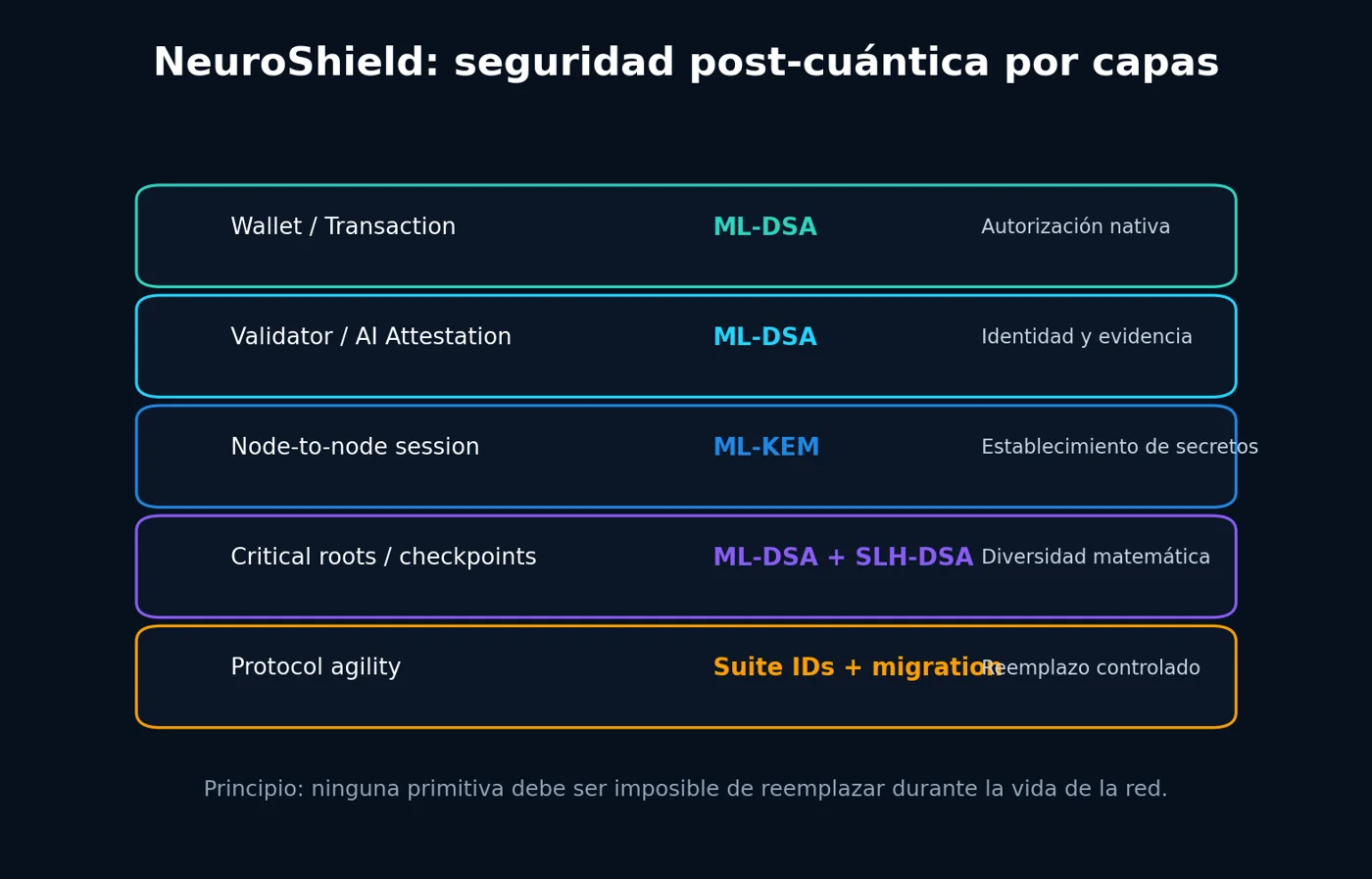
The strategy is not to promise that one algorithm stays secure for a century, but to guarantee the network can migrate primitives, cryptographic suites and authorization formats in a governed, verifiable way. Native accounts (neuro1…) keep post-quantum authority; secp256k1 or Ed25519 never become the final authority.
- 01Wallet / transaction · ML-DSA
- 02Validator / AI attestation · ML-DSA
- 03Node-to-node session · ML-KEM
- 04Critical roots · ML-DSA + SLH-DSA
- 05Protocol agility · suite IDs + migration
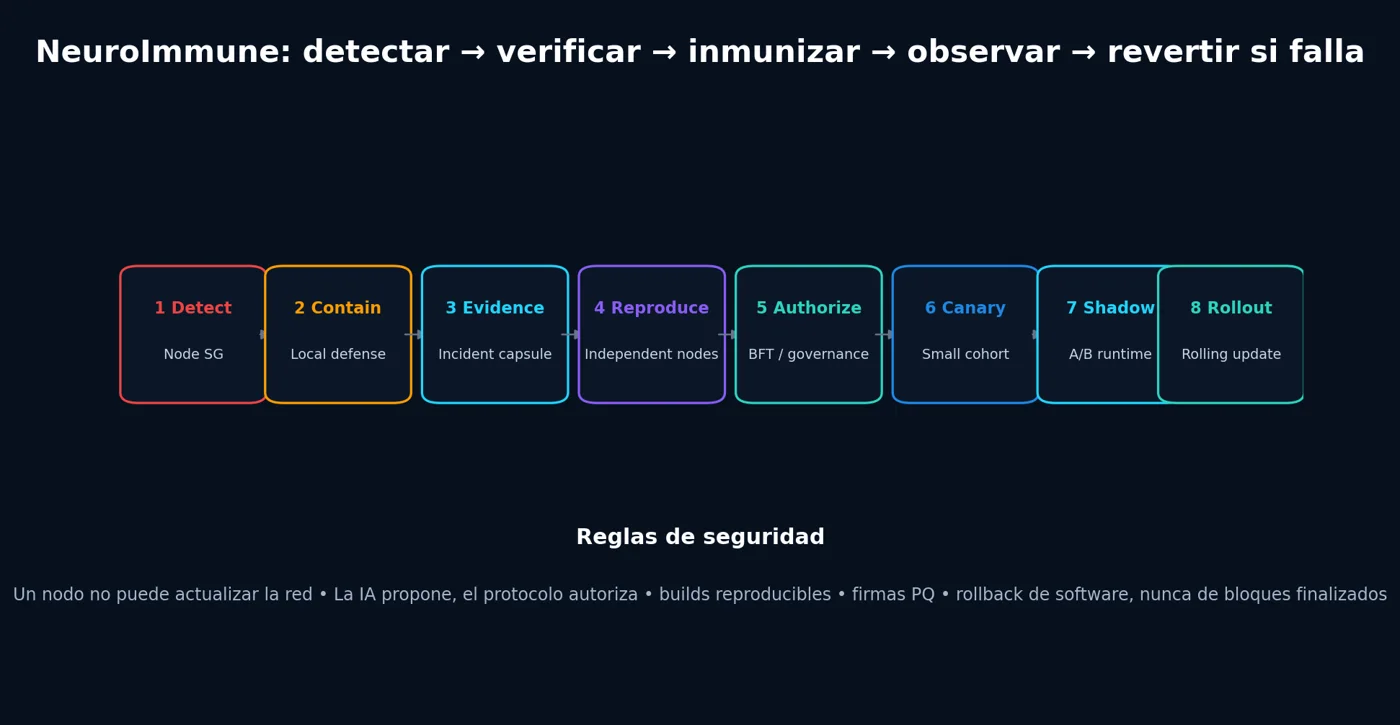
A self-healing, upgradeable network.
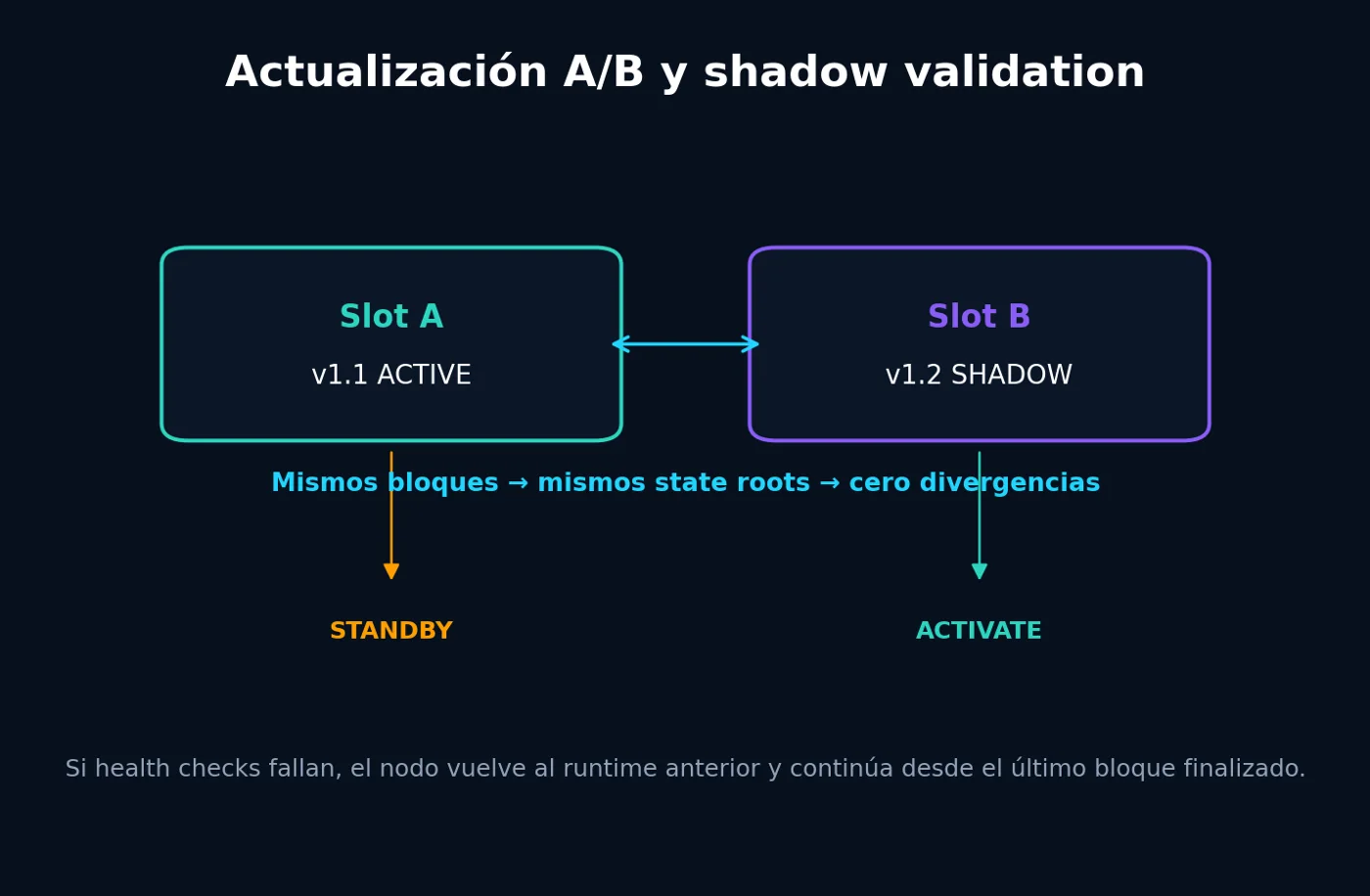
A node that detects and contains an attack emits a signed incident capsule with evidence, fingerprints and tests. Other nodes reproduce it in isolated environments; if the mitigation validates, governance authorizes a canary rollout with shadow mode and A/B runtime. If the new version degrades health or diverges in state, software returns to the previous runtime without reverting finalized blocks.
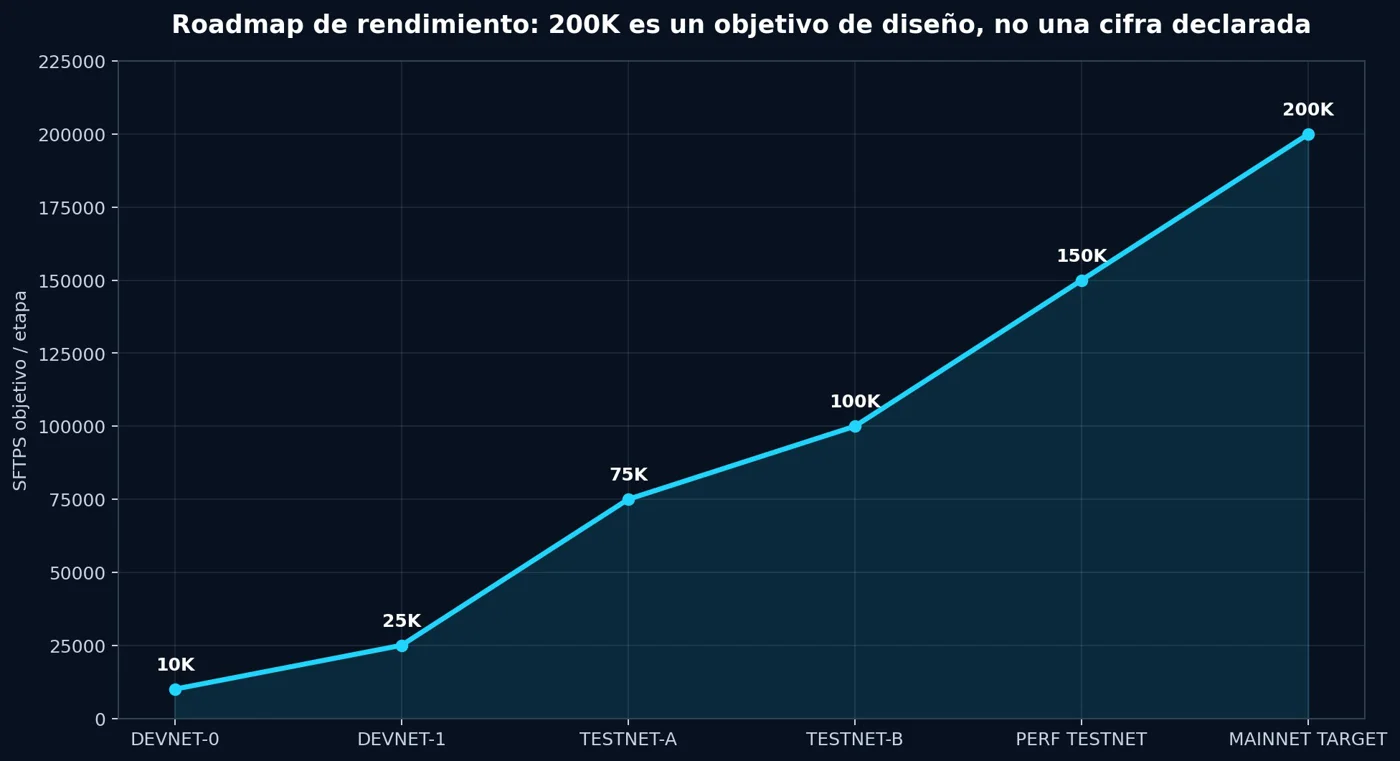
200,000 SFTPS is a design goal, not a declared figure.
To count as SFTPS, an operation must pass protocol cryptographic validation, be executed, included in a committed state and finalized by consensus. The final number depends on implementation, hardware, WAN topology, PQC signature size, contract load and real transaction mix. Only measured, reproducible benchmarks will be published.
Communication rule: superlatives only after a public testnet, methodology and independent benchmarks.
Validators never serve the UI directly.
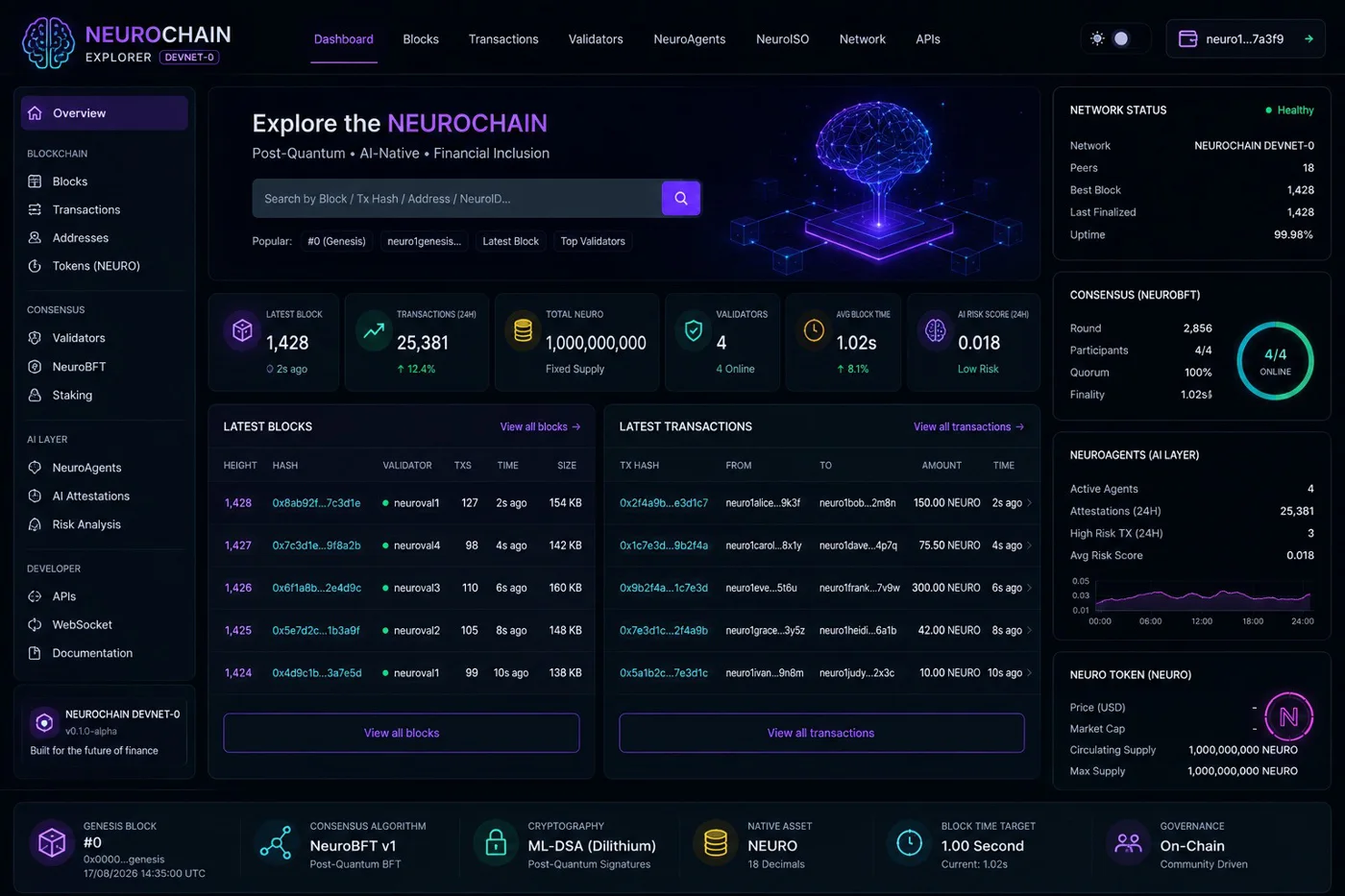
Full nodes → event stream → indexers → explorer DB and cache → API → web and wallets. The explorer scales independently and never becomes part of the ledger's security surface.
From one workstation to a permissionless mainnet.
4 local validators + AI + explorer + benchmark. Genesis, PQ accounts, Block #0.
20+ nodes across regions, wallet integrations, SDK, EVM adapter.
50–500 validators, tNEURO faucet, staking, audits, WAN load.
Adversarial testing, multi-client, reproducible benchmarks.
Production infra, formal verification, institutional integrations. Permissionless.
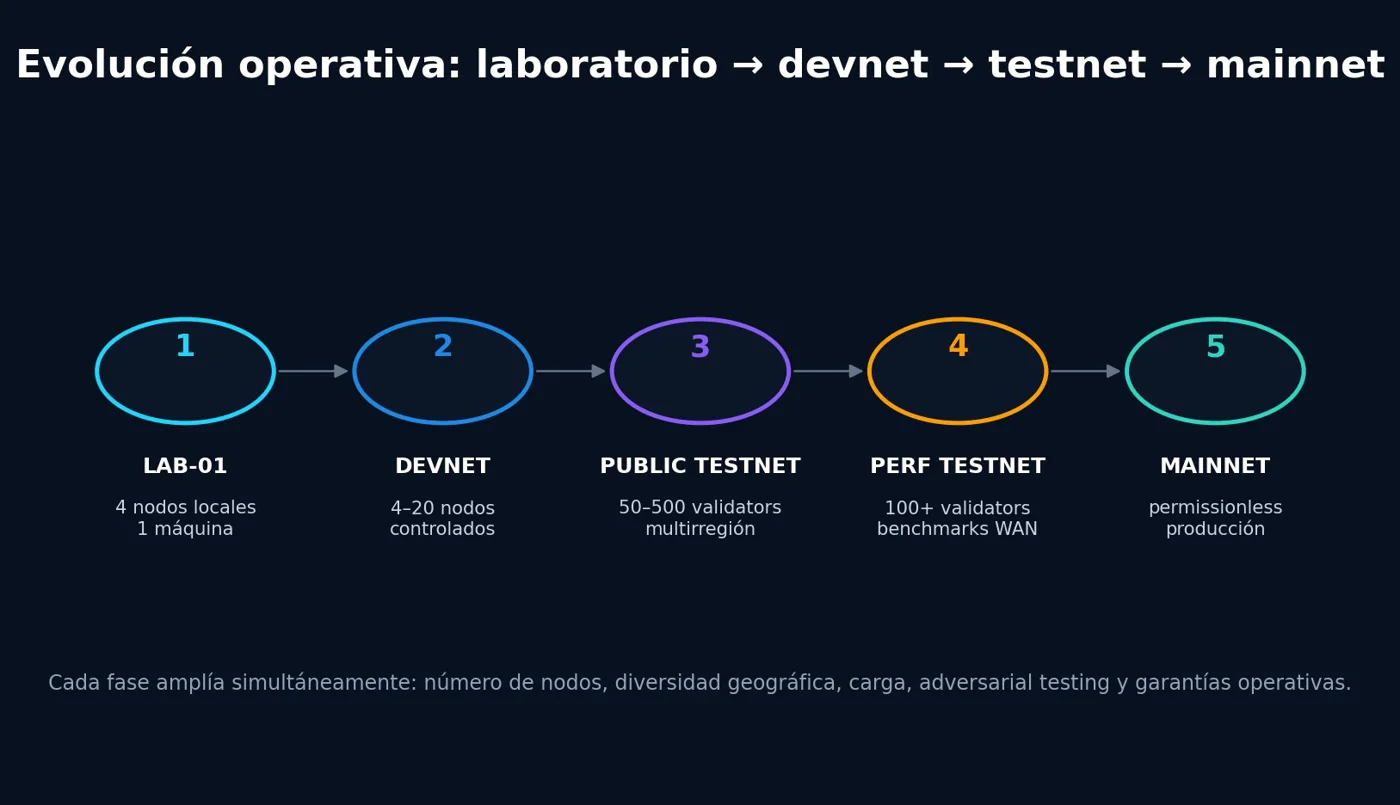
Milestone-based funding: the lab proves the core, the devnet proves distribution, the testnet proves adversarial resilience, audits and benchmarks unlock mainnet capital. Ranges are planning estimates, not quotes.
This page summarizes the NEUROCHAIN Strategic & Technical Architecture Dossier v0.1 (August 2026), a conceptual document. It deliberately omits committee selection logic, final consensus message formats, internal thresholds, key derivation, slashing policies and production configurations. It is not source code, an audit, a final consensus specification nor a performance promise. Development is scheduled for 2027.
Help us build the first cognitive, post-quantum L1.
Validators, researchers, institutions and developers.
Contact the team